William Greaves:
At a time when Black lives and perspectives were largely absent from mainstream American cinema, filmmaking became a way for William Greaves to address that absence. He documented communities, movements and individuals whose stories were often overlooked, offering a different view of American history. Between 1953 and 2005, Greaves worked as a producer, writer, director, cinematographer and editor on seventy-nine films. His work spans documentary, narrative and hybrid forms. His subjects range from the civil rights and Black power movements to figures such as Ida B. Wells and Ralph Bunche. With the *Symbiopsychotaxiplasm* films, Greaves pushed further into experimentation, questioning the boundaries between documentary, fiction and the filmmaking process itself.
David Greaves:
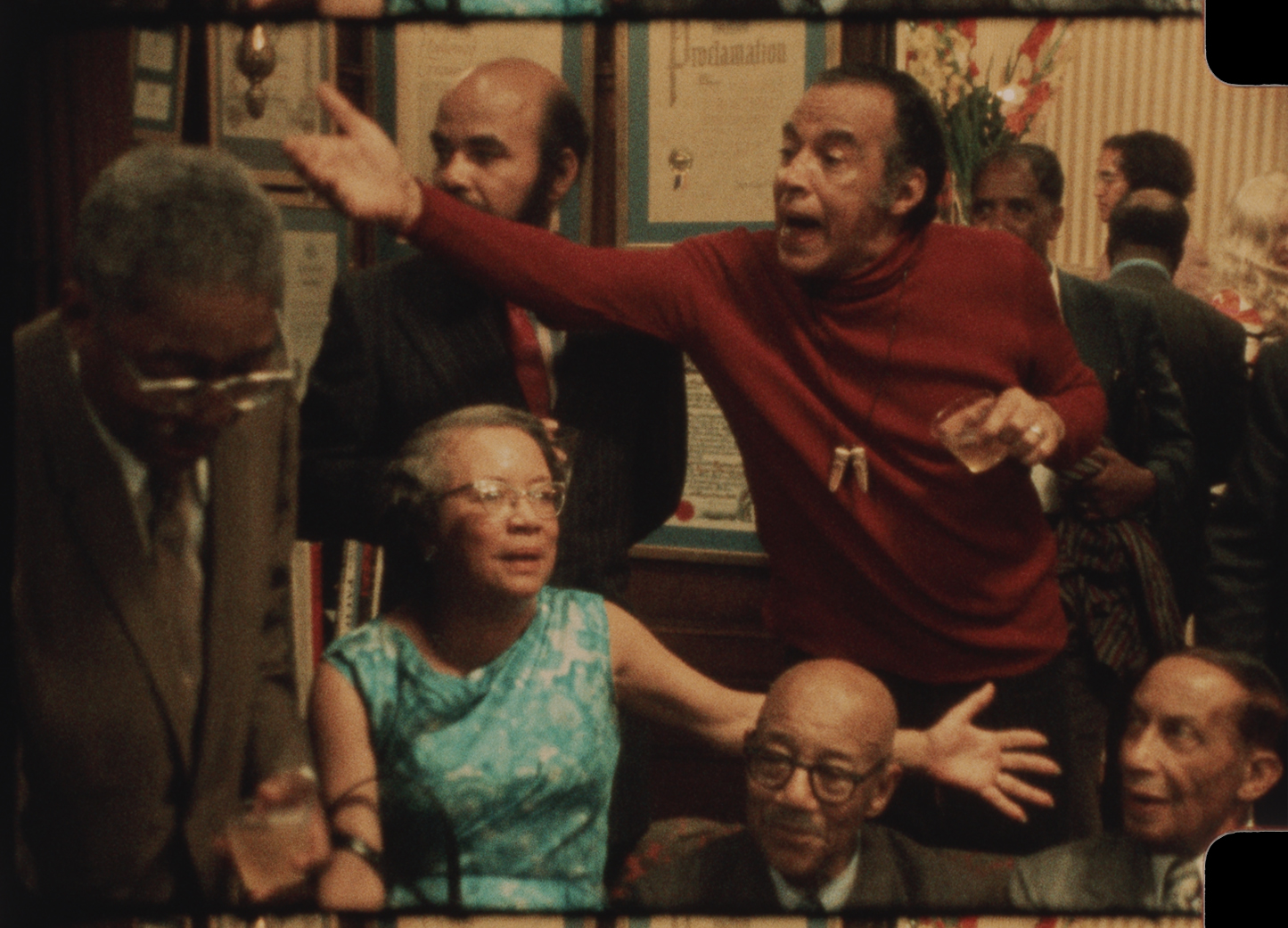
An award-winning filmmaker and journalist whose work spans documentary, cinematography, editing and journalism. David Greaves, the son of filmmaker William Greaves, worked as cinematographer and editor on many of his father’s films, including Symbiopsychotaxiplasm: Take 1. In 1972, at the age of 26, he was one of the original cameramen who filmed a gathering of artists and intellectuals at Duke Ellington’s apartment in Harlem. More than five decades later, Greaves returned to this footage to complete Once Upon a Time in Harlem, co-directed with his father. For Greaves, documentary filmmaking is a way of preserving not only people, but also the time in which they lived. His approach is rooted in cinéma vérité and in the belief that the camera can act as a kind of time capsule, capturing personalities, conversations and the atmosphere of a particular moment. Alongside filmmaking, Greaves has worked as a journalist and founded DBG Media and the independent newspaper Our Time Press in 1996.
William Greaves
Symbiopsychotaxiplasm: Take 2½ (2005)
Ralph Bunche: An American Odyssey (2001)
Ida B. Wells: A Passion for Justice (1989)
From These Roots (1974)
Nationtime (1972)
The Fight (1971)
Still a Brother: Inside the Negro Middle Class (1968)
Symbiopsychotaxiplasm: Take One (1968)
(selected filmography)