
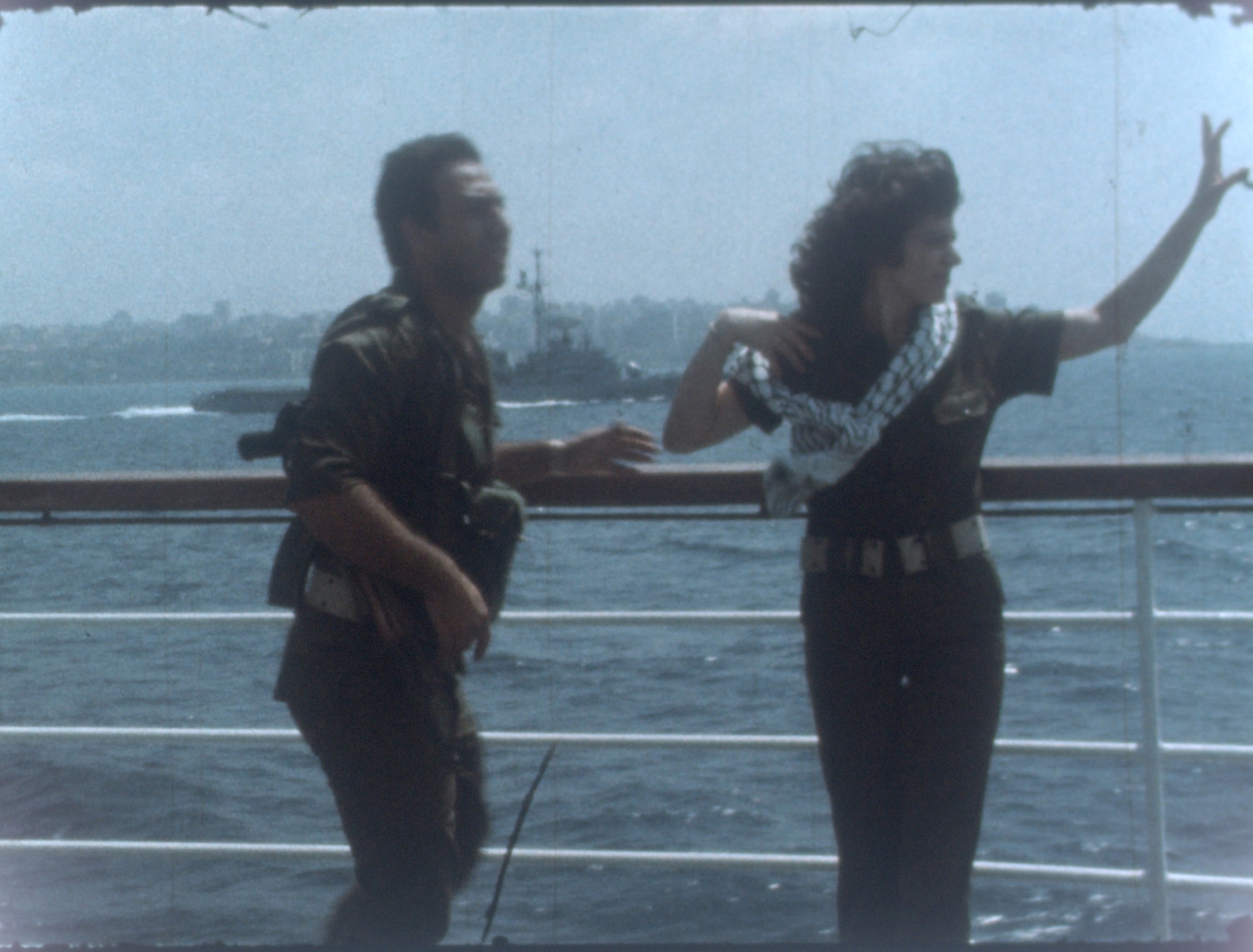
In 2018, pioneering Lebanese filmmaker Jocelyne Saab wrote to Palestinian filmmaker and archivist Mohanad Yaqubi, proposing that they work together. He did not reply in time. Two months later, Saab died. What begins as an attempt to understand her invitation becomes the collaboration they never had: a cinematic letter assembled from the images, words and historical traces she left behind.
Between 1973 and 1983, Saab made sixteen films about revolutions, wars and everyday life across Palestine, Lebanon, Egypt, Iran and Western Sahara. She documented political struggle from within, yet never lost sight of ordinary gestures, faces and voices. Working with Mathilde Rouxel and 115 carefully catalogued reels, Yaqubi follows both a region in upheaval and the evolving vision of an independent Arab woman filmmaker finding her place in a world dominated by men.
The past refuses to remain past. As Yaqubi restores Saab’s images of Lebanon, his own family home in Gaza is destroyed, binding their histories through parallel experiences of loss. His voice enters the archive not to explain or contain it, but to ask what political cinema can preserve, whose gaze shapes history and what responsibilities accompany the act of filming. and
Presented in collaboration with Masahat
